


Blog > seller guide > documentation
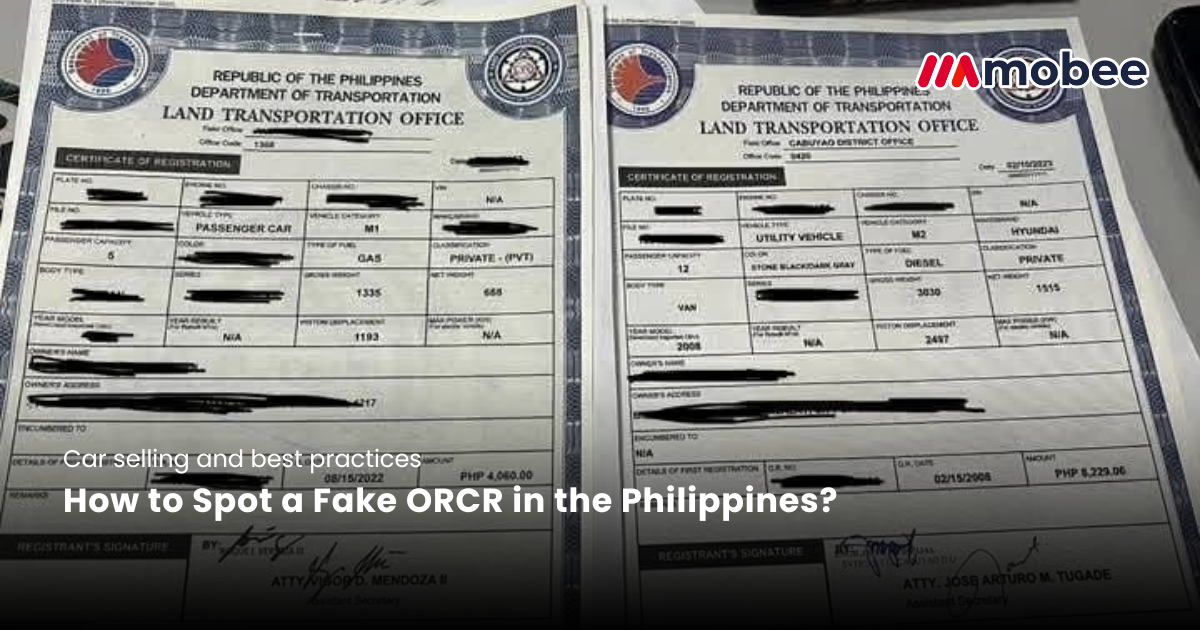
How to Spot a Fake ORCR in the Philippines

When buying or selling a car in the Philippines, one of the most important documents is the ORCR — the Official Receipt (OR) and Certificate of Registration (CR) issued by the Land Transportation Office (LTO). These documents prove legal ownership and roadworthiness. Unfortunately, fake ORCRs have become more common, putting buyers and sellers at risk of fraud, fines, and even vehicle confiscation.
Here’s a guide to help you identify a fake ORCR and protect yourself during a car transaction.
1. Check for Consistency in Document Details
A genuine OR and CR will have consistent details, including:
- Plate number
- Vehicle Identification Number (VIN)
- Engine number
- Owner’s name and address
- Make, model, color, and year
Red Flag: If any of the details are mismatched between the OR and CR, or they don’t match the actual vehicle, the documents might be forged.
2. Examine the Paper Quality and Print
Genuine LTO documents use specialised paper and printing methods:
- ORs are printed on thermal paper (similar to official receipts)
- CRs are printed on yellow or blue security paper with watermark patterns
- Both have clear, sharp print and no typographical errors
Red Flag: Faded text, blurry printing, or regular bond paper indicates a possible fake.
3. Look for Security Features
The CR includes several security elements:
- Watermark of the LTO seal
- Microtext or fine print that can’t be easily copied
- Barcode that can be scanned
Red Flag: If the watermark is missing or the barcode is just an image, it’s likely counterfeit.
4. Verify Through LTO's SMS or Online System
You can verify the CR through:
- LTO SMS Service: Text “LTO VEHICLE [plate number]” to 2600
- LTO Online Portal (if available)
This gives you the official record, including vehicle status and registration validity.
Red Flag: If the details returned don’t match the document, or the vehicle is not found in the LTO database, that’s a major warning sign.
5. Ask for the Original and Photocopies
Always ask to see the original documents, not just photocopies or scanned images.
Red Flag: Sellers who only provide photocopies or give excuses like “the original is lost” may be hiding something.
6. Cross-check with PNP-HPG or LTO Offices
If you’re still unsure, you can go to:
- PNP Highway Patrol Group (HPG) for stolen vehicle verification
- Your local LTO branch for document authentication
These agencies can verify whether the vehicle is blacklisted, carnapped, or using fake documents.
Final Tips to Stay Safe
- Never skip verification even if the seller seems trustworthy
- Avoid paying in full until the ORCR is verified
- Use trusted platforms like Mobee Cars Philippines where documentation is carefully checked for every transaction
Need Help Selling Your Car? Mobee Cars Philippines ensures all cars go through proper inspection and ORCR verification.
We help you sell your car safely, easily, and with full documentation support - no scams, no shortcuts. Sell Your Car with Mobee Cars Today!
Was this article helpful?
Author
Jeffrey Ong
Mobee Philippines
Voluntarily Surrendering a Car to the Bank in the Philippines
17 May 2025 Mobee Cars PhilippinesIdentifying Flood-Prone Areas in the Philippines: Essential Resources and Tips for Preparedness
15 November 2024 Mobee Cars PhilippinesHow to Sell a Financed Car in the Philippines Safely and Avoid Pasalo Scams
27 February 2025 Mobee Cars PhilippinesNo comment yet. Be the first to comment.